Level 4 Certificate in Aesthetic Practice Core Knowledge and Advanced Skin Science (RQF)
Develop the scientific knowledge & professional understanding needed for safer aesthetic practice
Being able to carry out an aesthetic treatment is only one part of becoming a safe and knowledgeable practitioner.
You also need to understand:
- how the skin functions;
- why different skin conditions develop;
- how health, medication and lifestyle may affect treatment;
- how infection can be transmitted and prevented;
- the legal and professional responsibilities involved in aesthetic practice;
- how to consult thoroughly and obtain informed consent;
- when a treatment should be adapted, postponed or refused;
- when a client should be referred to another professional.
The Focus Awards Level 4 Certificate in Aesthetic Practice Core Knowledge and Advanced Skin Science is a regulated, theory-based qualification designed to develop the underpinning knowledge required for professional non-surgical aesthetic practice.
It combines essential aesthetic-practice knowledge with a more advanced study of skin science and the physiology of skin conditions.
This is a regulated Focus Awards qualification only. There is no separate CPD stage or interim CPD certificate.
You will receive the qualification once all required assignments and portfolio evidence have been completed successfully, assessed and quality assured.
Who this qualification is for
This qualification may be suitable for you if you:
- already work in beauty, skincare or aesthetics;
- want to develop a stronger scientific understanding of the skin;
- are preparing to progress into advanced aesthetic procedures;
- want to understand skin conditions in greater depth;
- want to improve the safety and professionalism of your consultations;
- need a regulated Level 4 core-knowledge qualification for further training;
- have completed practical aesthetic training but feel that your underpinning theory is limited;
- want to improve your understanding of legislation, infection control and informed consent;
- want to make more informed treatment decisions;
- prefer a flexible, theory-based home-study qualification.
This course may also suit experienced practitioners who want to formalise or update their knowledge.
However, it is a Level 4 qualification. If you already hold advanced skin-science, healthcare or aesthetic qualifications, please contact us before enrolling so we can help you decide whether the content will add sufficient depth to your existing knowledge.
Entry requirements
Learners must already hold an anatomy and physiology qualification at a minimum of Level 3, with appropriate core knowledge of facial anatomy.
Before enrolling, we may ask you to provide evidence of:
- the qualification title;
- the awarding organisation;
- the qualification level;
- the units completed;
- the date of achievement.
Holding a Level 3 anatomy and physiology qualification provides the foundation needed to understand the more advanced skin-science and aesthetic-practice content within this programme.
If you are unsure whether your existing qualification meets the entry requirements, please contact us before booking.
What will this qualification help you do?
This course is designed to strengthen the knowledge behind your professional decisions.
It can help you:
- approach aesthetic practice more safely and responsibly;
- understand the professional boundaries between medical and non-medical practitioners;
- recognise the legislation and regulatory considerations relevant to aesthetic practice;
- understand how microorganisms and infection may affect clients and treatments;
- carry out more detailed consultations;
- obtain valid and informed consent;
- recognise factors that may affect treatment suitability;
- improve your understanding of facial anatomy and physiology;
- understand the structure and function of the skin in greater depth;
- explore the physiology behind common skin conditions;
- recognise when a concern falls outside your professional scope;
- understand when referral may be required;
- make more informed decisions before recommending or performing treatment.
Why core knowledge matters
Aesthetic procedures can carry greater risks than many traditional beauty treatments.
Practitioners may be working with:
- compromised skin;
- controlled trauma;
- electrical or energy-based equipment;
- invasive or minimally invasive techniques;
- products that alter the skin barrier;
- clients with complex medical histories;
- heightened expectations;
- treatments that may cause adverse reactions.
This makes thorough underpinning knowledge essential.
A practitioner should not rely solely on:
- manufacturer training;
- treatment protocols;
- social-media education;
- short demonstrations;
- memorised contraindication lists;
- the settings used by another practitioner.
You need to understand why a treatment may be suitable, what could go wrong and when it would be safer not to proceed.
Qualification structure
The qualification contains two mandatory units:
Aesthetic Practice Core Knowledge
This unit develops your understanding of the legal, scientific and professional foundations of aesthetic practice.
Advanced Skin Science
This unit develops your knowledge of the skin and the physiology of skin conditions relevant to aesthetic practice.
Both units must be completed successfully to achieve the full qualification.
Unit 1: Aesthetic Practice Core Knowledge
This unit focuses on the essential knowledge needed to work safely and professionally in non-surgical aesthetic practice.
Medical and non-medical aesthetic practitioners
You will develop your understanding of the roles and responsibilities of different practitioners working within aesthetics.
This may include:
- the distinction between medical and non-medical practitioners;
- professional scope of practice;
- competence and accountability;
- treatment limitations;
- referral pathways;
- multidisciplinary working;
- the importance of appropriate qualifications and insurance;
- recognising when a client requires medical assessment;
- avoiding the diagnosis or treatment of conditions outside your scope.
This section is not about presenting one type of practitioner as automatically better than another.
It is about understanding professional roles, limitations and responsibilities so that clients can be managed safely.
Legislation and regulation in aesthetic practice
You will explore the legal and regulatory considerations that may affect non-surgical aesthetic practice.
This may include:
- health and safety responsibilities;
- consumer protection;
- data protection and confidentiality;
- record keeping;
- consent;
- equality and discrimination;
- safeguarding;
- waste disposal;
- sharps management;
- infection prevention;
- product and equipment requirements;
- local authority licensing;
- insurance;
- professional accountability;
- advertising and treatment claims.
Laws, licensing arrangements and professional requirements can vary according to location and treatment type.
The qualification will help you understand the principles involved, but you remain responsible for checking the current requirements that apply to your own practice.
Microbiology
You will develop your understanding of microorganisms and their relevance to aesthetic practice.
This may include:
- bacteria;
- viruses;
- fungi;
- parasites;
- beneficial and harmful microorganisms;
- routes of transmission;
- factors affecting microbial growth;
- contamination;
- cross-infection;
- the body’s natural defences;
- infection risks within aesthetic environments.
This knowledge helps you understand why infection-control procedures must be followed rather than simply memorised.
Pathology
You will develop a foundation in pathological processes relevant to professional practice.
This may include:
- the difference between health and disease;
- causes of disease;
- inflammation;
- infection;
- tissue damage;
- healing;
- acute and chronic conditions;
- systemic and localised conditions;
- signs that may require referral;
- the impact of illness on treatment suitability.
This is not a medical diagnostic qualification.
You will learn to recognise professional limitations and refer appropriately where a condition requires medical diagnosis or treatment.
Biochemistry
You will explore essential biochemical principles relevant to the skin and aesthetic practice.
This may include:
- proteins;
- carbohydrates;
- lipids;
- enzymes;
- hormones;
- cellular energy;
- hydration;
- oxidation;
- free radicals;
- antioxidants;
- metabolic processes;
- the role of nutrients in normal tissue function.
The purpose is not to turn you into a biochemist.
It is to help you understand the biological processes that affect skin function, ageing, healing and treatment response.
Infection prevention and control
Aesthetic treatments may disrupt the skin barrier or involve equipment and materials that create infection risks.
You will develop your understanding of:
- standard infection-control precautions;
- hand hygiene;
- personal protective equipment;
- cleaning;
- disinfection;
- sterilisation;
- aseptic working principles;
- preventing cross-contamination;
- safe handling of sharps;
- clinical and non-clinical waste;
- treatment-room preparation;
- equipment decontamination;
- managing spillages;
- responding to exposure incidents;
- maintaining infection-control records.
Effective infection control is not an optional extra.
It is a core part of safe aesthetic practice.
Consultation
You will explore how to conduct a thorough and professional aesthetic consultation.
This may include:
- gathering personal and contact information;
- medical history;
- medication;
- allergies;
- previous treatments;
- previous adverse reactions;
- lifestyle;
- skincare use;
- treatment goals;
- client expectations;
- contraindications and cautions;
- psychological and emotional considerations;
- suitability for treatment;
- documenting the consultation;
- treatment planning;
- referral and postponement.
A good consultation should not be treated as a form-filling exercise.
It should help you decide whether treatment is safe, suitable and likely to meet the client’s expectations.
Informed consent
Consent involves more than obtaining a signature.
You will develop your understanding of:
- what makes consent valid;
- providing clear and balanced information;
- explaining foreseeable risks;
- discussing benefits and limitations;
- explaining alternatives;
- allowing time for questions;
- checking client understanding;
- avoiding pressure or coercion;
- documenting consent;
- consent for photographs;
- consent for the use of personal data;
- consent involving younger or vulnerable clients;
- circumstances in which consent may not be valid.
The client must understand what they are agreeing to.
A signed form alone does not prove that informed consent has taken place.
Anatomy and physiology for aesthetic practice
You will develop your existing anatomy and physiology knowledge in relation to aesthetic procedures.
This may include:
- facial structures;
- skin layers;
- muscles;
- nerves;
- blood supply;
- lymphatic structures;
- connective tissue;
- wound healing;
- inflammation;
- tissue repair;
- ageing;
- the relationship between facial anatomy and treatment risk.
The course does not replace specialist anatomy training for higher-risk procedures where additional qualifications are required.
Professional responsibility
Throughout the unit, you will consider your responsibility as a practitioner.
This includes:
- maintaining competence;
- completing appropriate continuing professional development;
- working within your scope;
- checking insurance;
- using suitable products and equipment;
- following manufacturers’ instructions;
- maintaining treatment records;
- responding appropriately to adverse events;
- referring when required;
- avoiding misleading claims;
- placing client safety ahead of making a sale.
Unit 2: Advanced Skin Science
The Advanced Skin Science unit develops your understanding of the skin beyond basic Level 2 or Level 3 skincare knowledge.
You will explore the structure, function and behaviour of the skin and the physiology of skin conditions relevant to aesthetic practice.
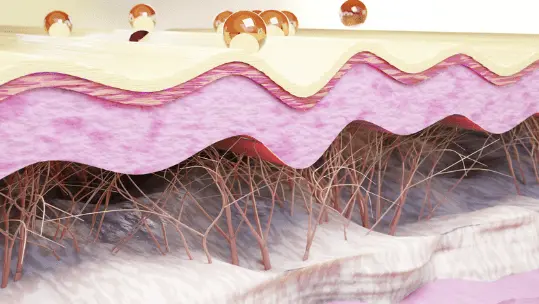
The structure of the skin
You will study the skin in greater depth, including:
- the epidermis;
- the dermis;
- the subcutaneous layer;
- the dermal–epidermal junction;
- keratinocytes;
- melanocytes;
- Langerhans cells;
- Merkel cells;
- fibroblasts;
- collagen;
- elastin;
- glycosaminoglycans;
- blood vessels;
- lymphatic vessels;
- nerves;
- sebaceous glands;
- sweat glands;
- hair follicles.
You will consider how these structures contribute to the appearance, function and resilience of the skin.
The skin barrier
The skin barrier plays a central role in hydration, sensitivity, protection and treatment tolerance.
You may explore:
- the stratum corneum;
- corneocytes;
- intercellular lipids;
- transepidermal water loss;
- natural moisturising factors;
- acid mantle;
- barrier disruption;
- skin permeability;
- barrier recovery;
- the impact of skincare and aesthetic treatments.
Understanding the barrier can help you make safer decisions about treatment preparation, intensity, combinations and aftercare.
Skin functions
You will develop a deeper understanding of the skin’s functions, including:
- protection;
- sensation;
- temperature regulation;
- immune defence;
- secretion;
- excretion;
- vitamin D synthesis;
- water regulation;
- wound healing;
- communication with other body systems.
The skin should not be viewed as an isolated surface.
Its condition can be influenced by internal and external factors.
Skin cell renewal and keratinisation
You may study:
- epidermal cell production;
- cell differentiation;
- keratinisation;
- desquamation;
- the cell-renewal cycle;
- factors affecting cell turnover;
- changes associated with ageing;
- the effect of inflammation and skin conditions;
- the potential impact of exfoliating and resurfacing procedures.
This knowledge is important when considering treatments designed to influence skin renewal.
Melanin and pigmentation
You will explore pigmentation processes, including:
- melanocytes;
- melanin production;
- melanosomes;
- melanin transfer;
- tyrosinase;
- genetic influences;
- ultraviolet exposure;
- hormonal influences;
- inflammation;
- pigmentation disorders;
- post-inflammatory hyperpigmentation;
- treatment risks associated with different skin tones.
This can help you understand why pigmentation concerns require careful assessment and why aggressive treatment may worsen some presentations.
Collagen, elastin and the extracellular matrix
You will study the structures that influence the strength, elasticity and appearance of the skin.
This may include:
- fibroblast activity;
- collagen synthesis and breakdown;
- elastin;
- extracellular matrix;
- glycation;
- oxidative stress;
- intrinsic ageing;
- extrinsic ageing;
- photoageing;
- tissue remodelling;
- factors that influence healing.
This knowledge is particularly relevant when considering treatments promoted for skin rejuvenation.
Inflammation and healing
Many aesthetic procedures create a controlled inflammatory or wound-healing response.
You will develop your understanding of:
- acute and chronic inflammation;
- the phases of healing;
- haemostasis;
- inflammatory response;
- proliferation;
- remodelling;
- collagen formation;
- factors that delay healing;
- infection risk;
- abnormal scarring;
- post-inflammatory pigmentation;
- the effects of health, medication and lifestyle.
This helps you understand why client selection and aftercare matter.
Skin ageing
You will explore the biological processes involved in skin ageing.
This may include:
- intrinsic ageing;
- extrinsic ageing;
- ultraviolet damage;
- oxidative stress;
- glycation;
- hormonal influences;
- changes in collagen and elastin;
- changes in hydration;
- reduced cell turnover;
- changes in fat, bone and muscle;
- lifestyle and environmental factors.
This can support more realistic consultations and reduce reliance on exaggerated anti-ageing claims.
Physiology of skin conditions
You will develop your understanding of the processes involved in skin conditions relevant to aesthetic practice.
Depending on the qualification requirements and course materials, this may include areas such as:
- acne;
- rosacea;
- pigmentation disorders;
- sensitive and reactive skin;
- dry and dehydrated skin;
- inflammatory skin conditions;
- photo-damage;
- ageing skin;
- scarring;
- vascular presentations;
- barrier impairment;
- post-inflammatory pigmentation.
The focus is on understanding how and why the condition develops, the factors that may influence it and the implications for aesthetic treatment.
Acne
You may study the factors involved in acne development, including:
- sebum production;
- follicular keratinisation;
- microbial involvement;
- inflammation;
- hormonal influences;
- lesion types;
- post-inflammatory pigmentation;
- scarring;
- treatment considerations;
- when medical referral may be required.
You should not diagnose or medically treat acne unless you hold an appropriate professional qualification that permits you to do so.
Rosacea and vascular sensitivity
You may explore:
- vascular reactivity;
- inflammation;
- barrier impairment;
- common triggers;
- visible redness;
- flushing;
- papules and pustules;
- client history;
- treatment cautions;
- referral considerations.
Understanding the physiology can help you avoid treatments that may aggravate the client’s skin.
Pigmentation concerns
You may study:
- hyperpigmentation;
- hypopigmentation;
- melasma;
- post-inflammatory hyperpigmentation;
- sun-related pigmentation;
- hormonal influences;
- inflammation;
- treatment risks;
- the importance of sun protection;
- circumstances requiring medical assessment.
Pigmented lesions must be approached cautiously. Practitioners must not assume that every area of pigmentation is suitable for cosmetic treatment.
Sensitive and impaired skin
You may explore the differences between:
- self-reported sensitive skin;
- sensitised skin;
- allergy;
- irritation;
- inflammation;
- barrier impairment;
- chronic skin conditions.
This can help you make more informed decisions about treatment selection, product use and recovery time.
Skin assessment and treatment implications
Although this qualification is not a practical skin-assessment course, the knowledge gained should support better professional reasoning.
You should be better able to consider:
- whether the client appears suitable for treatment;
- whether further consultation is needed;
- whether treatment intensity should be reduced;
- whether the skin barrier requires support first;
- whether the treatment could increase inflammation or pigmentation;
- whether the client’s expectations are realistic;
- whether referral is appropriate.
Treatment decisions must still remain within your practical qualifications, competence, insurance and professional scope.
What this qualification does not include
This is a theory and knowledge-based qualification.
It does not include:
- a CPD stage;
- an interim CPD certificate;
- practical aesthetic treatment training;
- treatment demonstrations;
- practical case studies;
- practical observations;
- permission to perform injectable treatments;
- permission to use lasers, IPL or advanced devices;
- medical diagnosis;
- prescribing;
- dermatology qualification;
- automatic entry to every advanced aesthetic course.
Separate practical qualifications and assessment are required for the treatments you intend to provide.
Course delivery
The course is completed through supported theory study and portfolio assessment.
You will work through the learning materials and complete written assignments covering the two mandatory units.
You will need access to:
- a computer or suitable device;
- Microsoft Word or an equivalent word-processing programme;
- email and internet access;
- suitable anatomy, skin-science and aesthetic-practice resources;
- time for independent study and written work.
The exact delivery arrangements may vary according to the Jane Bryan Beauty Training centre through which you enrol.
Your centre will explain:
- how your learning materials are provided;
- how assignments are submitted;
- how tutor contact is arranged;
- the expected course timescale;
- any enrolment deadline.
How you will be assessed
This qualification is internally assessed through a portfolio of evidence.
Your portfolio will demonstrate that you have achieved all required learning outcomes and assessment criteria for:
- Aesthetic Practice Core Knowledge;
- Advanced Skin Science.
Your evidence is likely to include:
- written questions;
- structured assignments;
- research tasks;
- case-based scenarios;
- reflective work;
- diagrams;
- explanations of legislation and professional responsibilities;
- skin-science assignments;
- comparisons and evaluations;
- any additional evidence requested by your assessor.
There are no practical treatment observations within this qualification unless your centre has added separate non-qualification activities.
The regulated qualification itself is achieved through completion of the required knowledge evidence.
The assignment process
You will receive guidance explaining what is required for each assignment.
Your assessor will review your work against the qualification criteria.
Where an answer does not yet meet the required standard, you may be asked to:
- provide more detail;
- apply your answer more clearly to aesthetic practice;
- correct inaccurate information;
- explain the scientific process in greater depth;
- provide an example;
- reference your sources appropriately;
- complete additional evidence.
This is a normal part of completing a regulated qualification.
The aim is not simply to finish the workbook. You must demonstrate the required Level 4 depth of understanding.
Tutor support
You will be allocated a tutor or assessor who will support you throughout the qualification.
Your tutor will:
- explain the qualification requirements;
- guide you through the course structure;
- help you understand what the assignments are asking;
- provide feedback on your submitted work;
- identify corrections or additional evidence;
- answer appropriate questions about the content;
- support you in developing Level 4 written answers;
- guide you towards completing your portfolio.
Tutor support does not mean that answers will be written for you.
You will need to carry out your own study, research and written work.
Qualification details
Qualification: Focus Awards Level 4 Certificate in Aesthetic Practice Core Knowledge and Advanced Skin Science (RQF)
Qualification number: 603/7307/6
Qualification level: Level 4
Credit value: 21 credits
Guided learning hours: 157 hours
Total qualification time: 210 hours
Minimum learner age: 18
Entry requirement: A completed anatomy and physiology qualification at a minimum of Level 3, including appropriate core knowledge of facial anatomy.
Mandatory units
You must complete both mandatory units.
Aesthetic Practice Core Knowledge
Unit reference: D/618/5347
Level: 4
Credit value: 12
Guided learning hours: 92
Advanced Skin Science
Unit reference: H/618/5348
Level: 4
Credit value: 9
Guided learning hours: 65
Course fee
The total course fee is £1,199.
This includes a £250 booking and registration fee.
Why choose a regulated Level 4 qualification?
There is a large amount of skin and aesthetic education available online.
However, online research can be fragmented, contradictory and difficult to evaluate.
A regulated qualification provides:
- defined learning outcomes;
- stated assessment criteria;
- structured Level 4 study;
- formal assessment;
- tutor feedback;
- internal quality assurance;
- recognition through an awarding organisation.
This does not mean that every regulated course automatically makes someone a safe practitioner.
Practical competence, experience, insurance, appropriate treatment qualifications and ongoing professional development remain essential.
However, this qualification provides a structured way to develop and demonstrate the underpinning knowledge expected at Level 4.
Is this suitable for experienced practitioners?
It may be particularly useful if you have significant practical experience but feel that your underlying scientific knowledge has developed through a mixture of:
- product training;
- manufacturer courses;
- practical experience;
- online research;
- social media;
- short treatment courses.
The qualification may help you organise that knowledge more systematically and identify areas where your understanding needs greater depth.
However, if you already hold a Level 4, Level 5 or Level 6 qualification containing substantial advanced skin science and aesthetic-practice content, please contact us before enrolling.
We will ask what you have already studied and what you want to understand more deeply.
We would rather recommend the right course than enrol you on a qualification that largely repeats your existing knowledge.
Frequently asked questions
Is there a CPD element?
No.
This is a regulated Focus Awards qualification only.
There is no separate CPD stage or interim CPD certificate.
Is there any practical treatment training?
No.
This qualification develops underpinning theory and knowledge.
It does not teach or assess practical aesthetic procedures.
Will this qualify me to perform aesthetic treatments?
No.
You will need separate practical qualifications for the treatments you intend to provide.
You must also meet any entry, insurance, licensing and professional requirements that apply.
Is this a dermatology qualification?
No.
The course includes advanced skin science and the physiology of skin conditions relevant to aesthetic practice.
It does not qualify you to diagnose or medically treat skin disease.
Will I learn about skin conditions?
Yes.
Advanced Skin Science includes study of the physiology of skin conditions relevant to aesthetic practice.
The course focuses on improving your understanding and professional decision-making, not medical diagnosis.
Do I need anatomy and physiology first?
Yes.
You must have completed and achieved an anatomy and physiology qualification at a minimum of Level 3, with core knowledge of facial anatomy.
Is this suitable for complete beginners?
It is not designed as a complete introduction to beauty or skincare.
Learners should already have the required anatomy and physiology knowledge and be prepared for Level 4 scientific study.
Is the course online?
The qualification is completed through supported theory study and written portfolio work.
Your training centre will confirm the precise delivery and tutor-support arrangements.
How is the course assessed?
You will complete a portfolio of written evidence covering both mandatory units.
There are no practical observations within the regulated qualification.
How long will the course take?
The qualification has 157 guided learning hours and 210 total qualification hours.
Your actual completion time will depend on:
- your previous knowledge;
- the time you can dedicate to study;
- the speed and quality of your assignment submissions;
- whether corrections or additional evidence are required;
- the agreed course deadline.
Your tutor will explain the expected timescale before you enrol.
Will I receive tutor support?
Yes.
You will be allocated a tutor or assessor who will guide you through the assignments and provide feedback on your work.
Can this help me progress into Level 4 treatments?
It may help meet the core-knowledge or skin-science requirements for certain courses.
However, every practical qualification has its own entry requirements.
Please check the requirements of your intended progression course before enrolling.
I already hold a Level 6 aesthetics qualification. Is this still suitable?
Possibly, but it depends on what your existing qualification included.
If you already studied advanced skin science, consultation, infection control and aesthetic-practice legislation in depth, some content may overlap.
Please send us details of your qualification and the areas you want to develop so we can give you an honest recommendation.
Is this the right qualification for you?
This qualification may be appropriate if you:
- want a regulated Level 4 qualification;
- need stronger core knowledge for aesthetic practice;
- want to study advanced skin science;
- want to understand the physiology of skin conditions;
- want to improve your knowledge of consultation and informed consent;
- want a stronger understanding of infection prevention;
- are preparing for advanced aesthetic training;
- already hold Level 3 anatomy and physiology;
- are prepared to complete substantial written assignments.
It may not be appropriate if you:
- want hands-on treatment training;
- need a beginner skincare qualification;
- want a short CPD course;
- want to learn only one skin condition;
- need medical diagnostic training;
- already hold an equivalent or higher qualification covering the same content in depth.
Please contact us before enrolling if you are uncertain.